The European Union is the worlds biggest trader, accounting for 20 per cent of global imports and exports. Free trade among its members underpinned the successful launch nearly 50 years ago of the EU. The Union is therefore a leading player in efforts to liberalise world trade for the mutual benefit of rich and poor countries alike.
Advertisement
Increased trade boosts world growth to everybodys advantage. It brings consumers a wider range of products to choose from. Competition between imports and local products lowers prices and raises quality. Liberalised trade enables the most efficient producers to compete fairly with rivals in other countries, whose governments have to cut import duties used to protect national firms.
A global player
The EUs basic philosophy is that it will open its market to imports from outside provided its trading partners do likewise. It is also keen to liberalise trade in services. But it is ready to make allowances for developing countries by allowing them to open their markets more slowly than industrialised countries and is helping them integrate into the world trading system.
The removal of barriers to free trade within the EU has made a significant contribution to its prosperity and this has reinforced its commitment to global liberalisation. As the EU member states removed tariffs on trade between them, they also unified their tariffs on goods imported from outside. This meant that products paid the same tariff whether they entered the EU via the ports of Genoa or Hamburg. As a result, a car from Japan which pays import duty on arrival in Germany can be shipped to Belgium or Poland and sold there in the same way as a German car. No further duty is charged.
The harmonisation of its common external tariff (CET), as it was known, meant that EU countries had to participate as a single group in international trade negotiations. External trade thus became one of the first instruments of European integration requiring member states to pool their sovereignty.
A firm commitment
As a result, the EU has been a key player along with its trading partners in the successive international rounds of trade liberalisation negotiations. The latest of these is the ongoing Doha Development Round which began in 2001. The aim of these rounds, which are now held in the framework of the World Trade Organisation, is to reduce tariffs and remove other barriers to world trade. Following earlier rounds, the EUs average tariff on industrial imports has now fallen to 4%, one of the lowest in the world.
Progress in the Doha Round has proved difficult to achieve. Wide and persistent differences have opened up between the rich and poor countries on several issues concerning access to each others markets and the long-running question of agricultural subsidies. Negotiations collapsed in 2003 and efforts to get the talks back on track in Hong Kong in December 2005 were only partly successful.
The rules-based system
The European Union has invested heavily in trying to make a success of the Doha Round. It is also a firm believer in the rules-based system of the WTO which provides a degree of legal certainty and transparency in the conduct of international trade. The WTO sets conditions under which its members can defend themselves against unfair practices like dumping selling at below cost by which exporters compete against local rivals. It provides a dispute settlements procedure when direct disputes arise between two or more trading partners.
A network of agreements

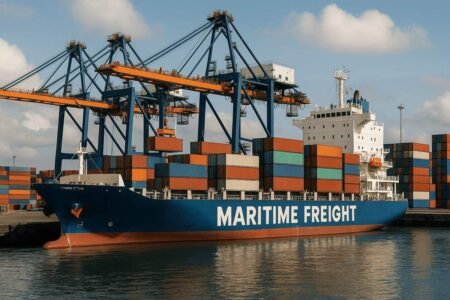
Goods are traded between exporters and importers.
Trade rules are multilateral, but trade itself is bilateral between buyers and sellers, exporters and importers. This is why the EU, in addition to its participation in Doha and previous WTO rounds, has also developed a network of bilateral trade agreements with individual countries and regions across the world.
It has trade agreements with its neighbours in the Mediterranean basin and with Russia and the other republics of the former Soviet Union. When it expanded from 15 to 25 members, the EU declared its intention to develop closer trade and partnership agreements with these neighbours.
The wider world
The EUs trade policy is closely linked to its development policy. The Union has granted duty-free or cut-rate preferential access to its market for most of the imports from developing countries and economies in transition under its general system of preferences (GSP). It goes even further for the 49 poorest countries in the world, all of whose exports with the sole exception of arms are to enjoy duty free entry to the EU market under a programme launched in 2001.
The EU has developed a new trade and development strategy with its 78 partners in the Africa-Pacific-Caribbean (ACP) group of countries aimed at integrating them into the world economy. It also has a trade agreement with South Africa that will lead to free trade between the two sides, and it is negotiating a free trade deal with the six members of the Gulf Cooperation Council (GCC) Bahrain, Kuwait, Oman, Qatar, Saudi Arabia and the United Arab Emirates.
The EU has trade and association agreements with Mexico and Chile in Latin America and has been negotiating a deal to liberalise trade with the Mercosur group Argentina, Brazil, Paraguay and Uruguay.
It does not, however, have specific trade agreements with its major trading partners among the developed countries like the United States and Japan. Trade is handled through the WTO mechanisms, although the EU has many agreements in individual sectors with both countries.
Given the size of their bilateral trade (the US takes 24% of EU exports and supplies 18% of its imports), it is not surprising that disputes break out between the two from time to time. While a number of these are settled bilaterally, others end up before the WTO dispute-settlement body. Although these disputes make the headlines, they represent less than 2% of total transatlantic trade.
The WTO framework also applies to the EUs trade with China, a country which greatly benefited from the WTO decision to remove restrictions on textile trade from January 2005. Special arrangements were negotiated between the two sides during the year to prevent the continuation of a surge in Chinese exports to the EU which affected the European garment industry.
EU External Trade policy web links
European Commission External Trade policy DG
The European Union in the World
EU Trade and Development
EU External Trade Grants and Loans
EU Legislation in Force: External Trade Policy
Recent case-law of the Court of Justice and the Court of First Instance : EU Commercial policy policy
Further information on EU External Trade Policy on Europa