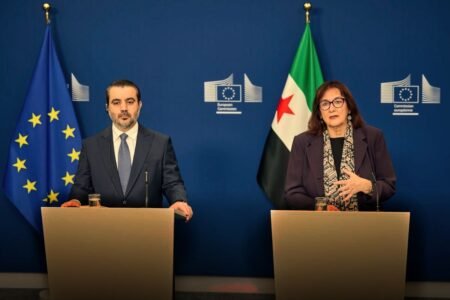
The European Commission, as current Chair of the Kimberley Process (KP) the international scheme to end trade in conflict diamonds, is hosting its Annual Conference in Brussels on 5-8 November. Some 300 delegates, including Ministers, officials, industry and civil society representatives, will meet to review efforts in diamond trading, cutting and polishing centres to exclude conflict diamonds, as well as controls in countries with artisanal diamond production. Participants are expected to agree further measures to strengthen the scheme.
Advertisement
At the start of the year, the European Commission set two types of priorities for its Chairmanship:
- to strengthen the implementation of the Kimberley Process (KP) and to consolidate the structural elements of the KP peer review visits, publication of statistics, effectiveness of internal controls;
- to handle actively any crisis situations which could compromise the effectiveness of the process.
The last 12 months have seen KP bodies undertake several projects to strengthen the institutional capacity of the KP to deal with challenges, as well as intensive collaborative efforts in response to concerns in individual countries. The KP has also worked hard to reach out to the wider international community and civil society, particularly in producer countries, and the public.
Among the most significant developments this year, the Commission highlights the following:
- through publication of statistics and a new website, to be unveiled at the Plenary, giving greater public access to KP documents and explaining how it has evolved since the 2003 Plenary will consider a proposal to make more statistics available frequently.
- recognizing the success of this system for spreading best practice, identifying issues and recommending solutions, KP participants agreed to launch a second round of review visits, which was launched by a visit to Zimbabwe in May. Since 2003, more than 50 teams have visited KP participants and applicants to assess their implementation of KP rules.
- agreed last year KP participants and observers have carried out 50 recommendations, both minor and major, to improve KP operations.
- Active the Chair and relevant KP working groups have taken a number of measures to deal with situations of concern about Kimberley Process Certification Scheme implementation, including reporting, dialogue, diplomatic measures, enhanced monitoring, provision of guidance. Although there are no easy solutions to some complex factual situations, this proactive approach has already prevented some potential crises, and provides a good way to work in partnership to resolve underlying problems.
- Better in support of KP objectives it is becoming clear that there are a significant number of programmes and initiatives where governments, industry and civil society are working in support of KP objectives, and beyond them, to improve regulatory systems and to better the lives of artisanal diamond miners.
- Working with to integrate it into the KP – Liberia was been admitted to the Kimberley Process in May, following three KP expert missions to advise and assess its system for controlling diamonds, and the lifting of UN sanctions. Liberia will report on developments in its diamond sector, and the considerable support and technical assistance it has received from the KP community.
- including development agencies and United Nations bodies: the close co-operation between the KP and the UN on diamond sanctions being just one example.
Participants are expected to agree on a number of decisions and recommendations to further consolidate the work of the KP in combating conflict diamonds, including:
- improvements of the peer review system,
- measures to enhance the application procedure for would-be participants,
- strengthening the role of technology and identification techniques in support of monitoring,
- providing greater funding and technical assistance in support of KP effectiveness,
- further improvements of transparency of statistics,
- further developments of the KPs internal rules and procedures.
Participants will also hear reports on:
- internal controls in trading, cutting and polishing centres, and in countries with artisanal alluvial production,
- efforts by individual countries, such as Ghana, Liberia and Zimbabwe, to strengthen their controls in the diamond sector, with support by partner countries geological and development experts.
- related initiatives by the broader international community, including UNCTADs work on investment, the Extractive Industries Transparency Initiative and the Diamond Development Initiative.
The Vice-Chair for 2008 will be selected at this meeting by consensus of Participants. India takes over as Chair on 1 January 2009.
Conflict diamonds can be defined as diamonds used by armed groups to finance rebellions against legitimate states.
The problem of conflict diamonds derives in part from the properties of diamonds themselves: diamonds are perhaps the most concentrated source of wealth in existence, and because of their small size and high value, they lend themselves to use in illegal transactions, money laundering, arms purchases etc.
Because of these properties, diamonds were used to finance some brutal wars seen in Africa during the 1990s:
- in Angola, by UNITA;
- in Sierra Leone, by the RUF (Revolutionary United Front) rebels, supported by the warlord, and former Liberian President, Charles Taylor, who is currently facing war crimes charges;
- in the Democratic Republic of Congo, by several rebel groups.
This situation was condemned by NGOs and the United Nations, resulting in growth in awareness of the issue by the end of the 1990s. Consumers no longer wanted to buy diamonds, often a sign of purity or love, not knowing if they had financed wars or other atrocities. A consensus developed around the need to prevent diamonds from being used to finance wars or falling into bad hands.
Negotiations began in 2000, in Kimberley in South Africa, giving the Kimberley Process its name. This was a symbolic place, given that this town had grown from nothing after the discovery of diamonds there in the 1870s Kimberley is thus eternally synonymous with this diamond rush.
Negotiations concluded in 2002 with the adoption of a document by which participating states agreed to implement controls and to certify all rough diamonds which they exported, in order to ensure that conflict diamonds could not enter the legal trade. In effect it creates a sort of entry barrier to prevent conflict diamonds from entering legal trade channels. The Kimberley Process rests first and foremost on these controls and certifications, and rough diamonds cannot be legally exported or imported unless they are accompanied by a certificate guaranteeing their conflict-free origin.
The Kimberley Process entered into force in 2003. It is perhaps worth noting some of the features of this unique instrument:
- : rather than being legally binding in international law, it is instead a commitment undertaken by participating states who must implement its requirements by domestic legislation. In other words, it is not an international treaty, and its implementation depends on the [national] actions of participating states;
- The KP depends entirely on the it is not an international organisation, and has no offices or permanent staff: it relies on the contributions burden-sharing of Participants. For example, the chairmanship rotates annually among Participants, and the country chairing bears the related costs.
- The KP is an among governments, the private sector and civil society, who all participate in the process, each making their own special contribution.
The KP is therefore unique in the international scene but that does not make it any less effective!
The KP is still a relatively young phenomenon but we can already draw some conclusions about its effectiveness. A general review of the Process took place in 2006, and concluded that the KP had contributed to the reduction in the percentage of international trade represented by conflict diamonds: it is now estimated that less than 1% of diamonds traded are conflict diamonds compared to estimates of 15% during the 1990s.
Despite its success, the KP has faced significant challenges, notably reports (in particular from the United Nations) concerning the trafficking of conflict diamonds originating in Côte dIvoire through some KP Participants, in particular Ghana. The most recent KP Plenary meeting, which took place in early November in Gaborone, Botswana, sought solutions and agreed that Ghana would commit to strengthen its internal controls over the diamond trade in order to be able to prevent infiltration by conflict diamonds of Ivorian origin.
The case of Côte dIvoire and Ghana demonstrates the need for effective internal controls. Since KP implementation is the responsibility of its Participants, its effectiveness depends on the capacity of each [national] administration to ensure compliance with [national] rules in other words, their ability to implement internal controls (on-the-spot checks, audits, traceability of diamonds from mine to point of export…) in order to guarantee that conflict diamonds do not enter the system. This issue is particularly challenging for countries which have alluvial/artisanal production, which is often found in remote areas which are difficult to reach and to control.
The EU has played a key role in the KP since it began. Europe has major interests in the diamond industry since it is the biggest diamond trading centre in the world, and more than 80% of the worlds rough diamonds pass through Antwerp in Belgium. We have no option but to be involved in discussions on the diamond trade.
But beyond commercial interest, the EU is above all committed to the KP as a conflict prevention tool and a way to ensure better regulation and a fairer, more equitable world trade. The KP is genuinely an instrument of stability in countries where the state and its institutions are fragile. Sierra Leone is a striking example of this, a county that now plays an important role in the KP, particularly on the issue of controlling artisanal/alluvial production.
The EU also considers the KP as a useful tool to stabilise fragile states and support their sustainable development. One of the effects of the KP has been to support the integration of parallel economic networks into the formal economy; this can generate significant fiscal revenues for the countries concerned and enable them to better manage their development. For example, the Democratic Republic of Congo has just had a record year, exporting diamonds worth some $900 million, in part thanks to the KP, which has encouraged legal exports and made illicit exports more difficult.
The Commission represents the EU within the KP. The KP is implemented in the EU by a Council Regulation (Regulation 2368/2002), with the support of national administrations, who, for example, carry out customs controls, and issue KP certificates.